About the Cricket Bat Willow : English vs Kashmir
Introduction
The performance of a cricket bat depends heavily on the type of willow used to make it. Willow is a soft hardwood that offers the ideal balance of strength, flexibility, and shock absorption needed for striking a cricket ball.
The two main types used in modern cricket are English willow and Kashmir willow. These willow types vary not just in their geographical origins, but also in their playing performance, growth patterns, and the way they respond when shaped into cricket bats.
English Willow
Where It Comes From
English willow is grown mainly in England, particularly in regions with cool, damp climates such as Essex and surrounding counties. The climate plays a huge role in its quality, slow growth due to cooler weather creates a softer, more fibrous wood structure.
Key Characteristics
English willow is considered premium because of its internal structure:
Lower density wood - lighter bats with better pickup
Straight, even grains - more consistent performance
Soft fibrous structure - better compression on impact
Higher moisture retention - enhanced “ping” and rebound
The softer fibers allow the bat to slightly compress when the ball hits it and then spring back, creating a powerful rebound effect.
Why It’s Better (Performance Advantage)
English willow is preferred by professional cricketers because it delivers:
Higher power output from the same swing effort
Larger effective sweet spot
Better bat speed due to lighter pickup
Superior ball rebound
Downside
Expensive
Needs knocking-in and oiling
More prone to damage if not maintained
Kashmir Willow
Where It Comes From
Kashmir willow is grown in the Kashmir region of northern India, where slightly different soil and climate conditions produce a denser, harder wood compared to English willow.
Key Characteristics
Kashmir willow has a noticeably different structure:
Higher density wood → heavier bats
Less uniform grain structure
Harder surface → more durable against rough use
Lower natural compression → less rebound compared to English willow
Why It’s Better
Much more affordable
Highly durable (resists dents and cracks)
Good for beginners and tennis-ball cricket
Low maintenance required
Downside
Heavier pickup
Smaller sweet spot
Less power and rebound compared to English willow
Direct Comparison (Simple Breakdown)
English Willow (England) → performance-focused, lightweight, high rebound, used by professionals
Kashmir Willow (India) → durability-focused, heavier, affordable, best for beginners
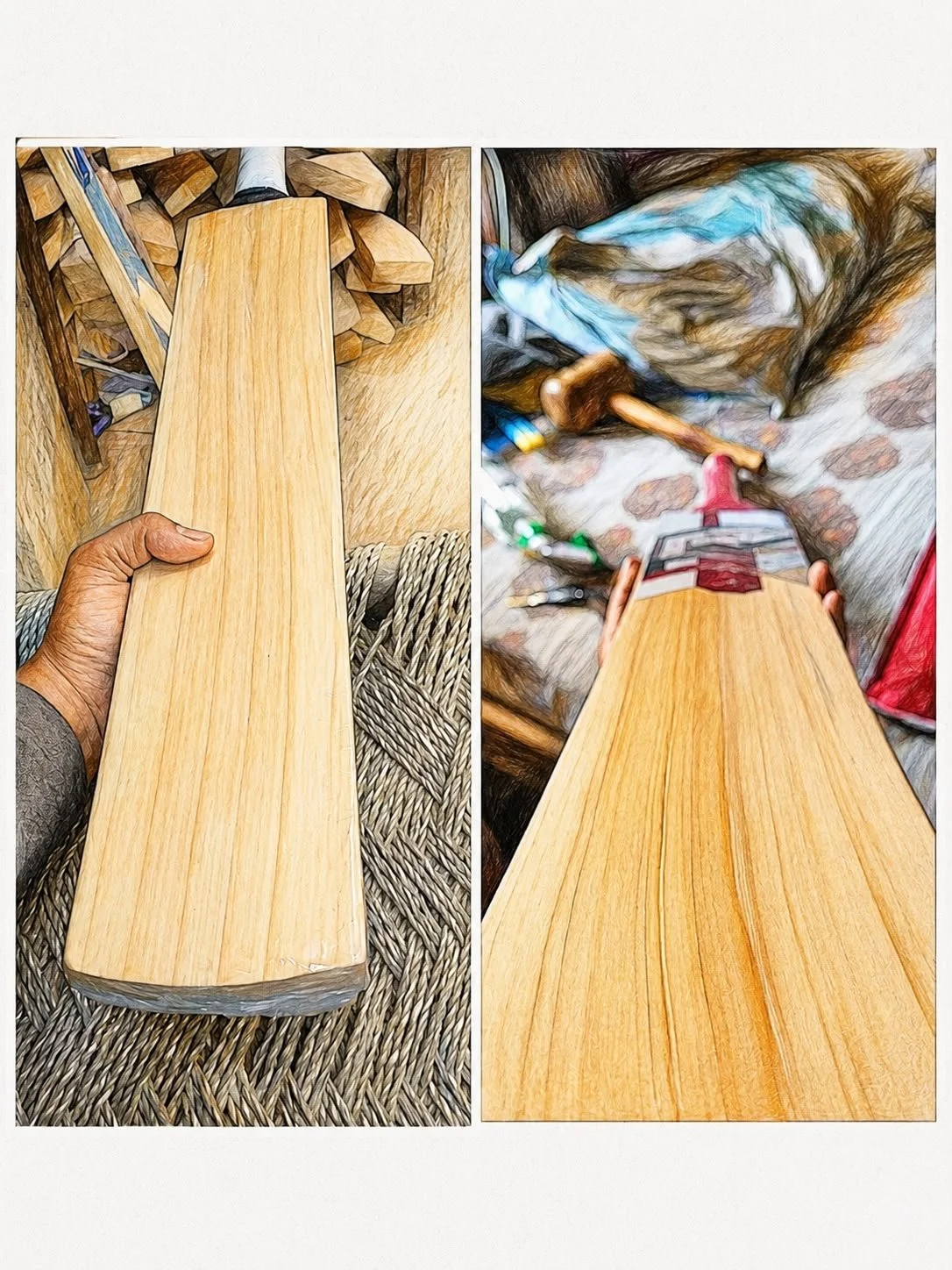
This is a side-by-side comparison of English Willow and Kashmir Willow. The English Willow (left) features a clean, linear grain structure, while the Kashmir Willow (right) has a more irregular and uneven grain pattern.
Conclusion
English willow is preferred due to performance, power, and feel, which is why it dominates professional cricket. However, Kashmir willow is preferred by local cricketers due to factors such as cost, durability, and accessibility, making it perfect for learning and casual play.
The right choice depends less on which is superior overall, and more on what stage of cricket you’re at.