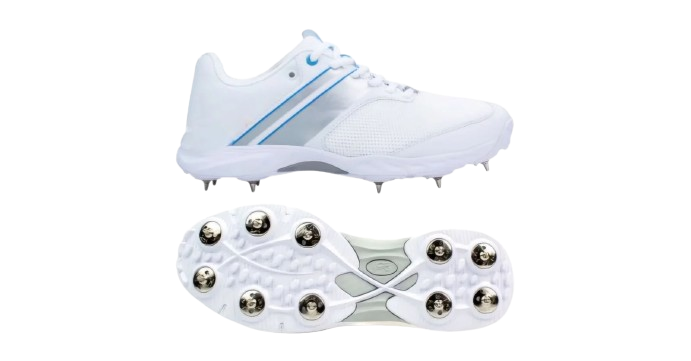
Fielding Shoes
Fielding shoes are specialized footwear designed to provide cricketers with the grip, stability, and comfort needed for quick movements in the field. Unlike regular sports shoes, cricket fielding shoes are engineered to handle the unique demands of the sport—such as sudden sprints, rapid changes in direction, and maintaining traction on both grassy and dry pitches.
Key Features:
Grip and Traction:
Fielding shoes typically feature rubber or spiked soles. Spiked soles, often used on natural turf, offer excellent grip for chasing the ball or diving. Rubber-soled shoes are preferred on artificial or indoor surfaces to prevent damage and slipping.Lightweight Construction:
The upper portion is usually made from lightweight synthetic or mesh materials, allowing players to move quickly without feeling weighed down.Support and Stability:
Good fielding shoes have reinforced midsoles and cushioned insoles to protect the feet during high-impact movements and to reduce fatigue over long matches.Durability:
The toe area is often reinforced to withstand repeated contact with the ground, especially when sliding or diving to stop the ball.
Choosing the Right Fielding Shoes:
Surface Type:
Spiked shoes are ideal for grassy outfields, while rubber soles are better for artificial pitches or hard ground.Fit and Comfort:
A snug but comfortable fit prevents blisters and improves agility.Player Role:
Fielders in close positions (slips, short leg) may prefer more stability, while outfielders may prioritize lightweight shoes for speed.
Importance in Performance:
Wearing the right fielding shoes can significantly improve a player’s performance by enhancing movement efficiency, reducing the risk of slipping, and providing the comfort needed to stay sharp throughout the innings. Poor footwear choice can lead to slower reactions, fatigue, or even injuries.