Cricket Bat
Cricket bat is the most essential equipment in the game of cricket. Designed to strike the ball, they are made from willow wood, which provides the perfect combination of strength, durability, and flexibility. The bat consists of two parts: the blade and the handle. The blade is flat on the striking side and has a ridge on the backside for strength. The handle, which is traditionally made of cane and bound with twine or rubber, ensures a firm grip and shock absorption.
Modern cricket bats are engineered for performance, with precise weight distribution, sweet spots for maximum power, and customized profiles for different playing styles.
Types of Cricket Bats
English Willow: Made from Salix alba caerulea, known for its superior quality and grain structure. Preferred by professional players.
Kashmir Willow: Denser and less springy, often used by beginners or amateur players.
Top Brands
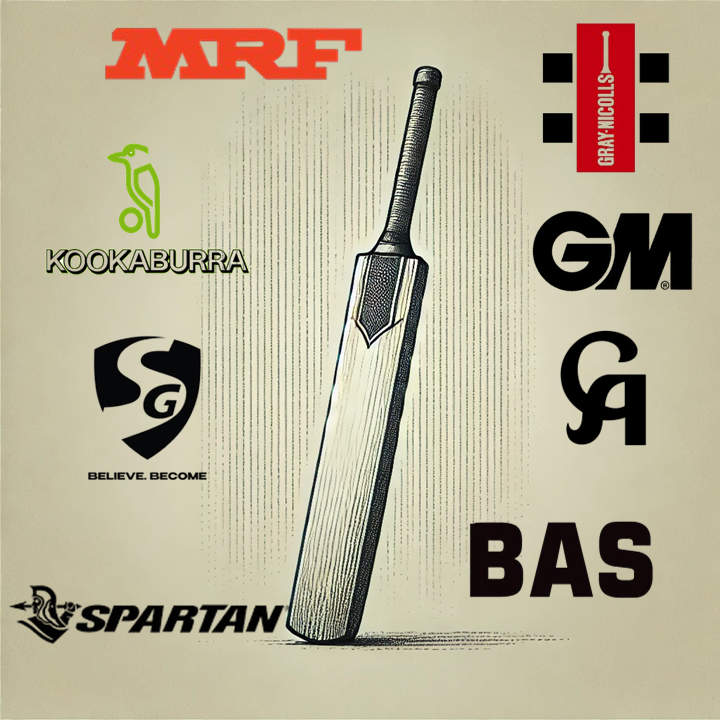
| Company | Country of Origin |
|---|---|
| Gray-Nicolls | United Kingdom |
| Gunn & Moore (GM) | United Kingdom |
| Kookaburra | Australia |
| Sanspareils Greenlands (SG) | India |
| Madras Rubber Factory (MRF) | India |
| Sareen Sports (SS) | India |
| Spartan | Australia |
| CA Sports | Pakistan |
The table highlights leading cricket bat manufacturers and their countries of origin. India has the most companies, reflecting its major role in cricket equipment production. Australia and the UK have manufacturers, pointing to their historical ties to the sport. This distribution underscores the global nature of cricket and the concentration of manufacturing in key cricket-playing nations.
What Champions use
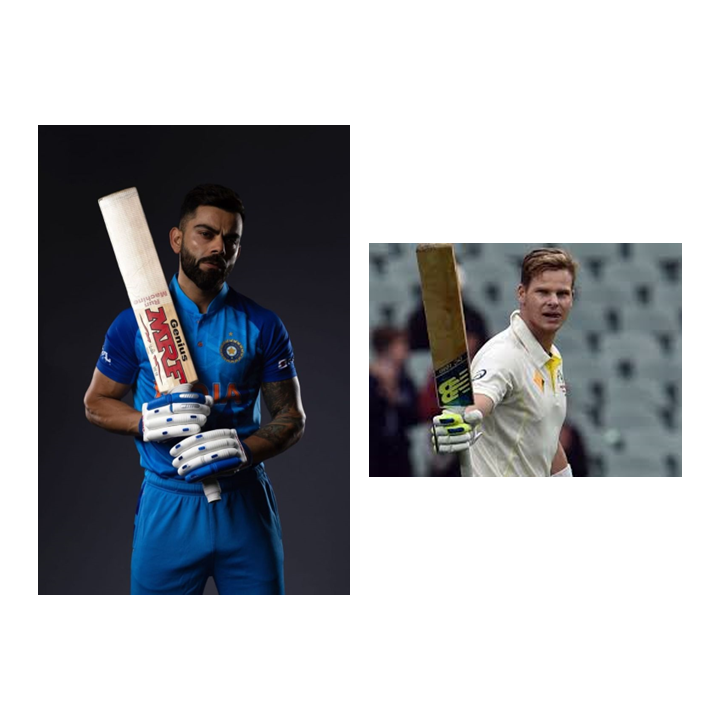
Virat Kohli
Bat: MRF Genius Grand Edition
Known for his consistent performance and impeccable technique, Kohli’s MRF bat is tailored for power hitting.
Steve Smith
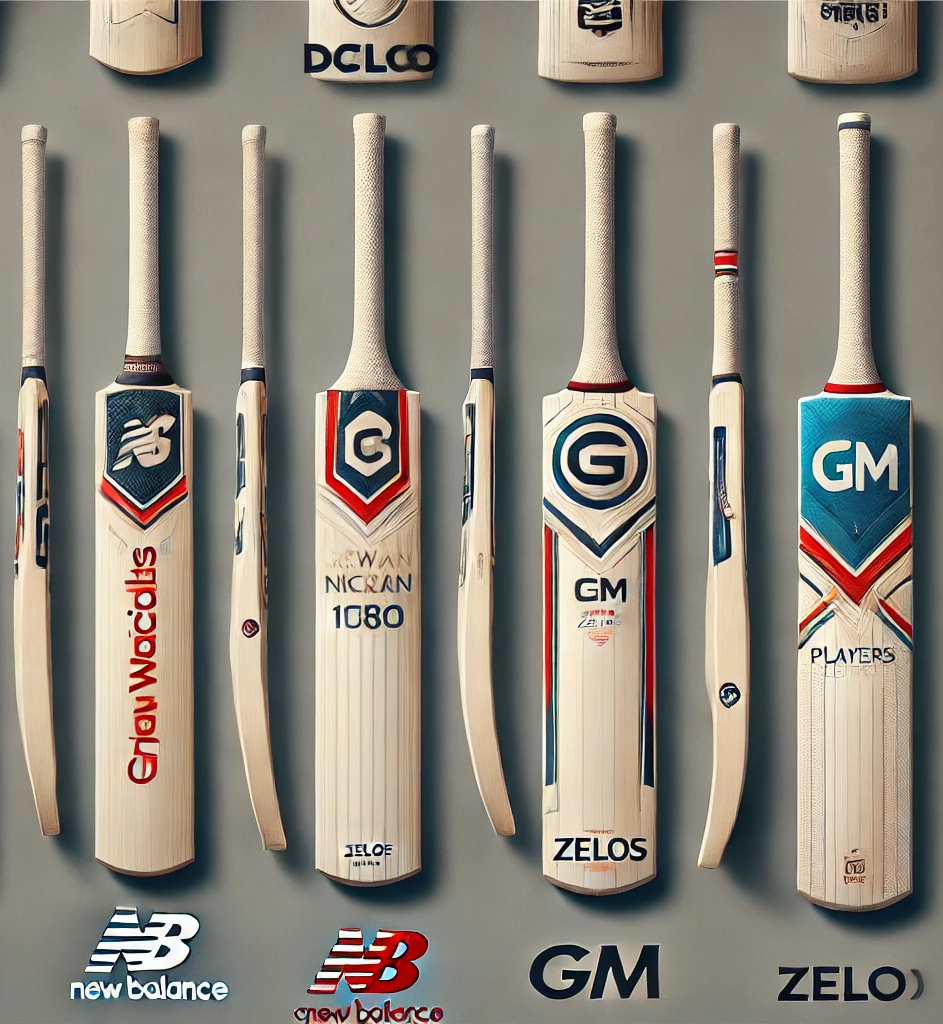
Bat: New Balance DC 1080
Smith’s bat is designed for his unorthodox yet highly effective batting style.
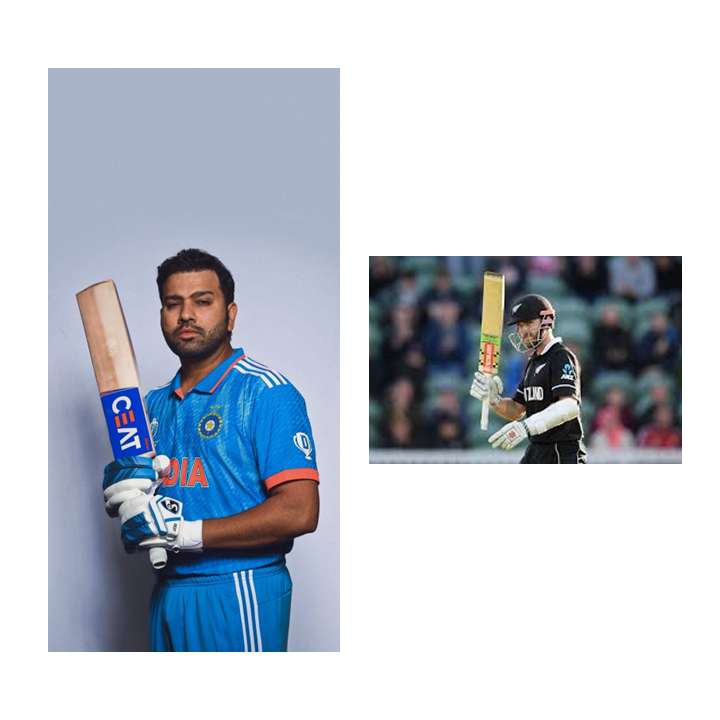
Kane Williamson
Bat: Gray-Nicolls Players Edition
The New Zealand captain uses a bat optimized for precision and timing.
Rohit Sharma
Bat: CEAT Hitman Edition
Rohit’s bat is engineered for lofted shots, ideal for his aggressive gameplay.
Joe Root
Bat: Gunn and Moore (GM) Zelos
Root’s bat emphasizes balance, allowing for smooth strokes and control.
Short and Long handle bats
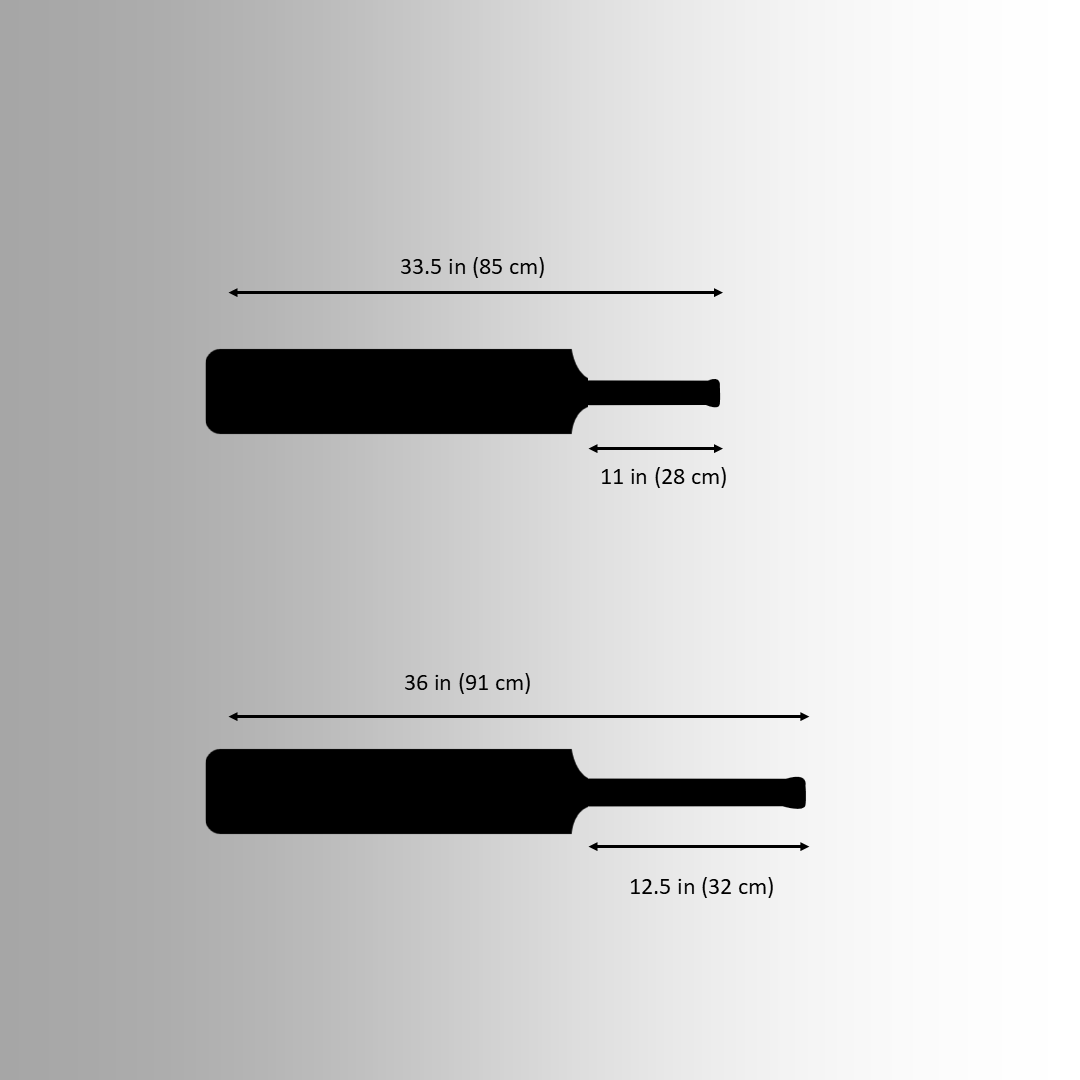
A short-handle cricket bat is the most commonly used bat among professional and amateur players. It is typically around 33.5 inches in length and is designed for players who are 5'5" to 6'2" tall. The shorter handle allows for better control and maneuverability, making it ideal for precision shots and quick stroke play. Players who prefer a balanced bat that offers a mix of power and control generally opt for a short-handle bat.
A long-handle cricket bat is designed for taller players, typically above 6'2", providing additional reach and leverage. These bats have a handle about an inch longer than short-handle bats, making them effective for power hitters who rely on lofted shots and long-range stroke play. The extra length helps generate greater bat speed and extended reach, which can be beneficial when facing bowlers with extra bounce. However, long-handle bats can feel slightly heavier and require greater wrist strength for effective control. They are commonly used by players who play expansive shots and prefer playing on the back foot.
| Feature | Long-Handle Bat | Short-Handle Bat |
|---|---|---|
| Reach | More reach, better for taller players | Less reach, suitable for shorter players |
| Power | Generates more power for big shots | Less power, but better for stroke play |
| Control | Harder to control, especially for shorter players | Better control and maneuverability |
| Weight | Usually heavier, can affect quick reflex shots | Lighter, making quick shots easier |
| Best for Players | Above 6’2” who prefer aerial shots | Below 6’2” who rely on timing and precision |