
Clothing
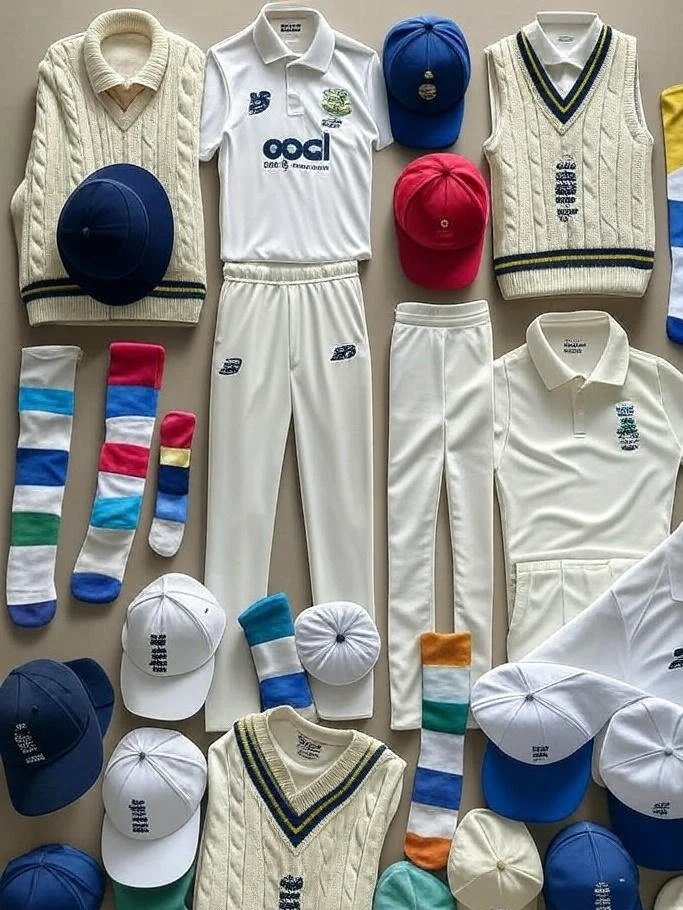
1. Cricket Whites
Purpose: Traditional attire for Test matches and first-class cricket.
Color: Always white or cream to reflect the non-commercial, formal nature of long-format games.
Design: Loose-fitting to allow ease of movement and good ventilation for long hours of play.
Material: Usually made from lightweight, breathable fabrics like polyester-cotton blends to ensure comfort in warm conditions.
Tradition: Symbolizes the classic and pure form of cricket, often associated with sportsmanship and history.
2. Team Jersey and Pants (for ODI and T20 Matches)
Purpose: Used in limited-overs cricket – One Day Internationals (ODIs) and Twenty20 (T20) games.
Color: Colored kits, often designed with national or franchise colors, logos, and sponsors prominently displayed.
Design: More modern and athletic-looking; jerseys are form-fitting and made from moisture-wicking materials to help players stay dry.
Functionality: Allows players to identify teams easily and provides marketing opportunities for sponsors.
3. Caps/Hats (for Sun Protection)
Types:
Standard cricket cap (team-branded)
Wide-brim hat (often worn by fielders and bowlers in sunny conditions)
Purpose: Protects players from sun exposure during long hours on the field.
Practical Use: Helps improve visibility under direct sunlight and reduces the risk of heatstroke or sunburn.
4. Cricket Sweaters (for Cold Weather)
Use: Worn during early morning matches or in colder climates.
Design: Usually V-neck, sleeveless or full-sleeve sweaters, often in white or off-white.
Material: Made from wool or blended fibers that retain warmth while allowing some breathability.
Tradition: Often embroidered with the team's crest or logo, maintaining the formal look of cricket whites.
5. Socks
Function: Offers comfort and support inside cricket shoes.
Material: Thick, cushioned socks made from cotton or moisture-wicking fibers to absorb sweat and reduce the risk of blisters.
Importance: Crucial for long-duration matches to reduce foot fatigue and ensure player performance.
This clothing setup balances tradition, functionality, and comfort, adapting to different match formats and weather conditions while also promoting team identity and sponsorship in the modern game.
The table lists seven prominent companies that manufacture or supply cricket clothing, along with their countries of origin. The brands represent a diverse geographic spread, with notable contributions from India, the United Kingdom, Australia, Japan, and Germany. India features two major cricket brands—Sanspareils Greenlands (SG) and Sareen Sports (SS)—highlighting its strong domestic presence in cricket gear manufacturing. The UK is represented by Gunn & Moore (GM) and Gray-Nicolls, both known for their long-standing heritage in cricket equipment. Kookaburra from Australia and ASICS from Japan showcase the influence of international sportswear giants in cricket apparel, while Adidas from Germany reflects global sports brands' expansion into the cricket market. Overall, the table demonstrates the global nature of cricket clothing production, with a healthy balance between traditional cricket-specific companies and larger multinational sportswear brands.
Top Brands
| Brand | Country of Origin |
|---|---|
| Kookaburra | Australia |
| Sanspareils Greenlands (SG) | India |
| Sareen Sports (SS) | India |
| Gunn & Moore (GM) | United Kingdom |
| Gray-Nicolls | United Kingdom |
| ASICS | Japan |
| Adidas | Germany |